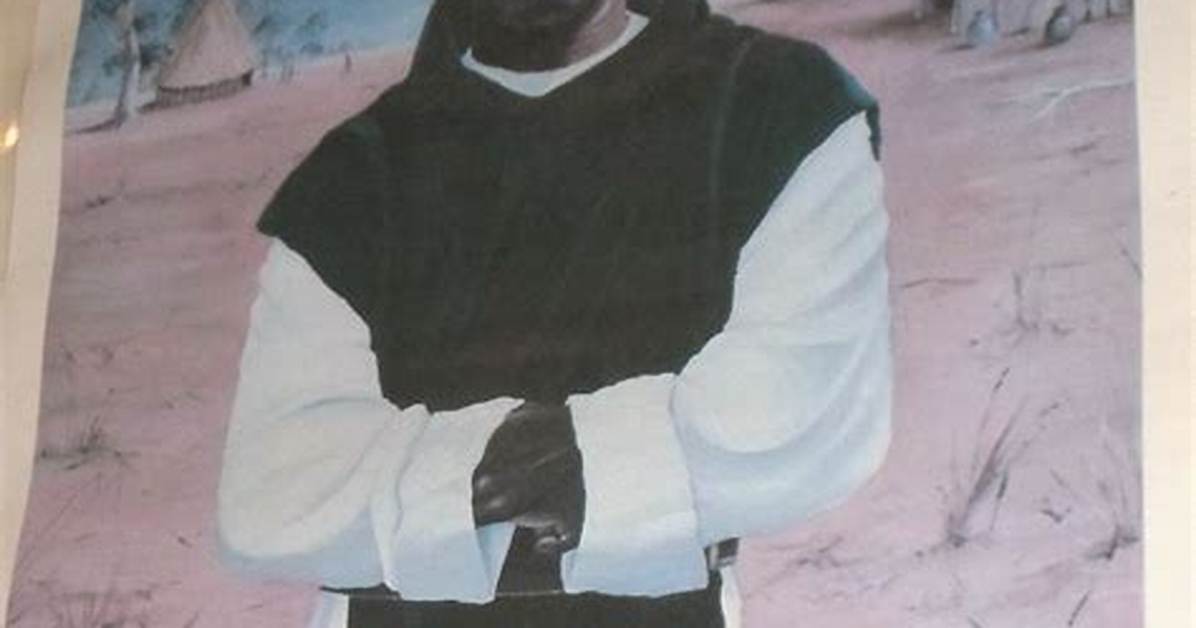
Cyprian Michael Iwene Tansi’s Biography, Net Worth, Fact, Career, Awards and Life Story
At that time in Nigeria, almost all priests were foreign missionaries. Few Africans were being ordained to the priesthood. The foreign missionaries were generally unwilling to live in the same poverty or conditions that the native-born Nigerians endured, and as a result if an area wanted a parish priest the local people had to get their money together and be able to supply enough money so that the priest could live well. This included building a church and rectory (which rather than adobe or mud, could be brick or concrete, with two stories and a zinc roof), buying a car, scooter or bicycle for the priest’s use, European style foods including wine, chicken, tea, coffee, sausages, peas, potatoes, imported foods, etc.
As Black priests became more common they often followed the lifestyle of the foreign missionaries. Monks and nuns also lived more comfortably than most Nigerians and people began looking at taking holy orders as a priest, monk or nun as a way to escape poverty.
When Michael became a parish priest, he refused to live in this fashion. He lived a very austere life in comparison to the other priests around him. He refused to live in a nice home, and he would build his own home using adobe, mud brick or other traditional materials. He would put rocks on his bed to make it uncomfortable. He would eat even poorer food than what the local people ate, surviving on tiny portions of yams that he sometimes purposely had burnt or improperly cooked. He sometimes had a motorbike provided to him, but he often preferred to use a bicycle or even just to walk, even though the distances were huge. He would walk even in tropical rainstorms.
His lifestyle shocked and amazed the Nigerian Catholics, who were not accustomed to this kind of priest. And he became extremely popular and loved among the four parishes that he served in. He organized the community to help the poor and needy, and he personally would help people to build their own homes or perform other projects. He never insisted that poor people pay the ANC, although for richer people he insisted. He was very good at building homes, and taught people new building techniques with adobe or mud brick that were copied and used by the whole community. He was remembered as always being very kind.
He was unyielding in confronting vice among his flock. For example, towards the issue of pre-marital sex, he would not allow men to see their brides before they got married, and he would organize the community to place the bride to be in a special home wherein she would be looked after until she got married, and if the groom attempted to go there without Fr. Tansi’s permission, he could be beaten. He also had a women’s group organized who would enforce disciplines on their own members, such that if one of their members had an abortion they would burn her uniform in a ceremony and expel her. He was also a very strict disciplinarian with students who failed to work hard at the parish school to the point of hiding near the school, waiting for the bell to ring, and then when he saw students coming late he would come out of his hiding place and beat them for coming late to school.
He also stood up against oppression of women within the traditional culture and advised women to fight back against those who would rape them or mistreat them. On one occasion, a female parishioner was attacked by a group of pagan males, and she fought back against them, and Fr Michael, who was nearby, came on his bicycle and joined with her and fought them until they fled. He then encouraged her to bring the assailants to court and she did, and won the case against them, forcing them each to pay her four pounds; this case was a milestone in the establishment of women’s rights in Nigeria.
He also was very militantly opposed to some aspects of the traditional pagan culture in Nigeria, especially the masquerades. Whenever pagans would organize these masked processions, Father Michael would go out to confront them and stand in their way. In a masquerade there was one person wearing a mask, whom was said to not really be a human being, but actually a spirit, and Fr Michael once went to one of these people and read a definition of a spirit as one that did not possess a body or physical substance, and he then punched the masked man in the head, saying that since he was a spirit, he must not have felt that. His hostility to them and their traditional culture may have been intensified because Nigerian pagans had murdered his own mother after claiming she was a witch who had caused mischief.
He gave the community advice and teachings about the right way to live in a practical fashion. For example, there were many mango trees in his locale, and it was common for people to go to the trees and throw rocks at the fruit, and in the process they would knock down far more than they were going to eat, or they knocked down the unripe fruit along with the ripened fruit; and as a result the tree would be denuded before the season was over. Michael considered this very wasteful, and told his parishioners to pluck each mango individually so that nothing was wasted and that they would not lack mangoes to eat later.
He worked in four very large parishes: Nnewi, Dunukofia, Akpu/Ajlli and Aguleri (his own home town).
He was also remembered as being a perfectionist in everything, always wanting all things to be done in the most perfect of ways, which sometimes placed a burden on those who were under him that they resented.


![Sophia Beausoleil [Nbc5] Wikipedia, Biography, Age, Salary, Husband, Instagram](https://scrapper.tuinbouwcommunicatie.nl/uploads/sophia-beausoleil-nbc5-wikipedia-biography-age-salary_400.jpg)
![Sophia Beausoleil [Nbc5] Wikipedia, Biography, Age, Salary, Husband, Instagram](https://scrapper.tuinbouwcommunicatie.nl/uploads/sophia-beausoleil-nbc5-wikipedia-biography-age-salary_300.jpg)