Shooting of Amadou Diallo’s Biography, Net Worth, Fact, Career, Awards and Life Story
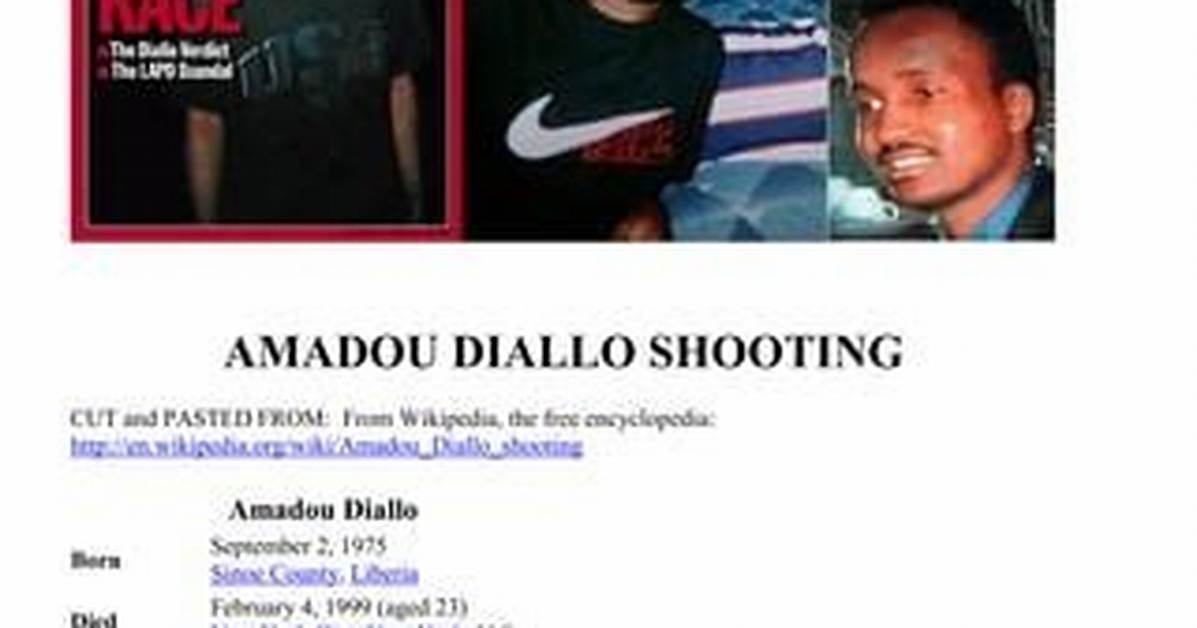
In the early morning of February 4, 1999, Diallo was standing near his building after returning from a meal. At about 12:40 a.m., police officers Edward McMellon, Sean Carroll, Kenneth Boss and Richard Murphy, who were all in street clothes, passed by in a Ford Taurus. Caroll later testified that Diallo matched the general description of a serial rapist who had struck a year earlier, or that he might have been a lookout.
The officers testified that they loudly identified themselves as NYPD officers, but a witness, Schrrie Elliott, testified that they started shooting without any warnings. Diallo ran up the outside steps toward his apartment house doorway at their approach, ignoring their orders to stop and “show his hands”. The porch lightbulb was out and Diallo was backlit by the inside vestibule light, showing only a silhouette. Diallo then reached into his jacket and withdrew his wallet. Seeing the man holding a small square object, Carroll yelled “Gun!” to alert his colleagues. The officers opened fire on Diallo, claiming that they believed he was holding a gun. During the shooting, lead officer McMellon tripped backward off the front stairs, causing the other officers to believe he had been shot. The four officers fired 41 shots, more than half of which went astray as Diallo was hit 19 times.
The post-shooting investigation found no weapons on Diallo’s body; the item he had pulled out of his jacket was not a gun, but a rectangular black wallet. The internal NYPD investigation ruled the officers had acted within policy, based on what a reasonable police officer would have done in the same circumstances with the information they had. The Diallo shooting led to a review of police training policy and the use of full metal jacket (FMJ) bullets. On March 25, 1999, a Bronx grand jury indicted the four officers on charges of second-degree murder and reckless endangerment. All four officers’ bail were set at $100,000. On December 16, an appellate court ordered a change of venue to Albany, New York, stating that pretrial publicity had made a fair trial in New York City impossible. On February 25, 2000, after two days of deliberation, a jury in Albany acquitted the officers of all charges. Officer Kenneth Boss had been previously involved in an incident where an unarmed man was shot. A 22-year-old man, Patrick Bailey, died after Boss shot him on October 31, 1997. As of 2012, Boss is the only remaining officer working for the NYPD. After his acquittal, Boss was disarmed and reassigned to desk duty. In October 2012, Commissioner Raymond W. Kelly restored Boss’ ability to carry a firearm against the protests of Diallo’s family. On December 17, 2015, Kenneth Boss, received a promotion to the rank of sergeant despite objections from the victim’s mother and civil rights activists. Boss was promoted in accordance to police policy, which is not subject to review by top department officials.