Sundiata Keita’s Biography, Net Worth, Fact, Career, Awards and Life Story
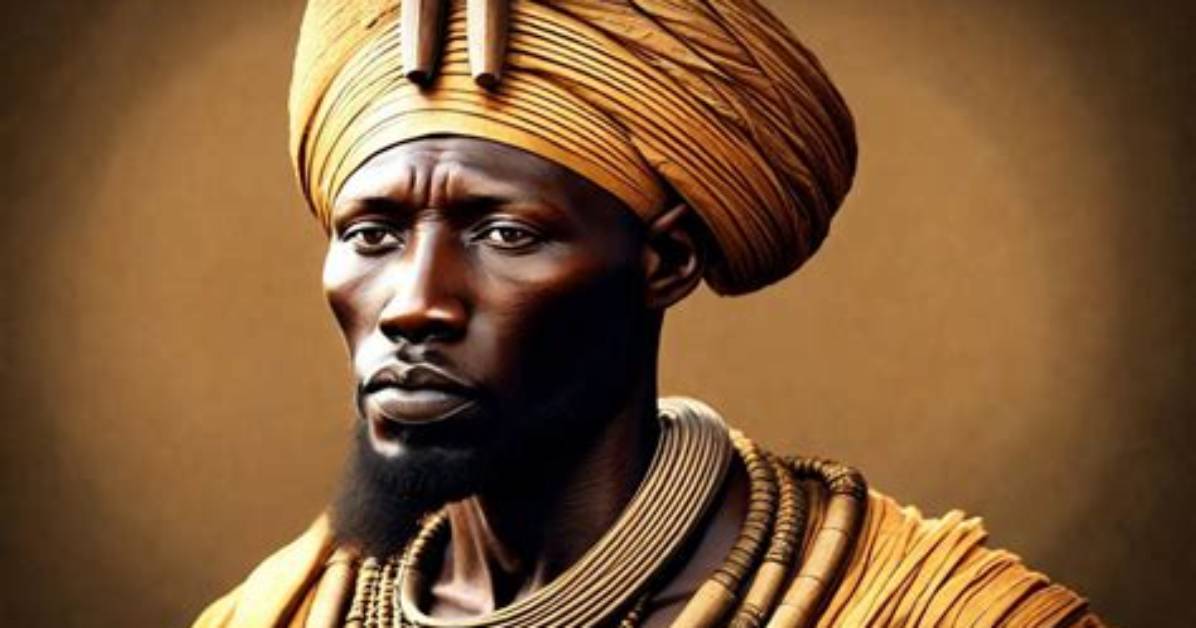
Delafosse previously proposed that, Soumaoro Kanté’s grandfather with the help of his army and the Sosso nobility of Kaniaga captured what was left of the sacked Ghana Empire, and by 1180, Diara Kanté (var: Jara Kante), Soumaoro’s father gained control of Koumbi Saleh, dethroned a Muslim dynasty and continued the Diarisso Dynasty (varition: Jariso or Jarisso) whose son (Soumaoro) went on to succeed him and launched an offensive against the Mandinkas. Delafosse’s original work have been refuted and discarded by many scholars including Monteil, Cornevin, etc. There was no Diara Kanté in the oral sources. That was an addition by Delafosee which was contrary to the original sources. The consensus is, in c. 1235, Sundiata who had survived one of Soumaoro’s earlier raids went to war with the help of his allies against King Soumaoro of Sosso. Although a valiant warrior, Soumaoro was defeated at The Battle of Kirina (c. 1235). Soumaoro is regarded as one of the true champions of the Traditional African religion. According to Fyle, Soumaoro was the inventor of the balafon and the dan (a four-string guitar used by the hunters and griots). After his victory at Kirina, Sundiata took control of the former conquered states of the Sosso and appropriated privileges among those who participated in the defeat of Soumaoro. The former allies of Soumaoro were also later defeated, in particular the king of Jolof. Serer oral tradition speaks of a Serer king of Jolof, involved in the occult (just as Soumaoro), who was later defeated by Tiramakhan Traore (one of the generals of Sundiata) after Sundiata sent his men to buy horses in Jolof. It is reported that, when Sundiata sent his men to Jolof to buy horses in a caravan loaded with gold, the king of Jolof took all the gold and horses – known among some as “the robbery of the horses”. In a revenge attack, Sundiata sent his general to Jolof to assassinate the king. It is believed that, it was probably this king of Jolof (known as Mansa Jolofing or Jolofing Mansa) who sided with Soumaoro at The Battle of Kirina and possibly belongs to the Ngom Dynasty of Jolof, the predecessors of the Diaw and Ndiaye Dynasties of Jolof. At present, little is known about the Ngom Dynasty of Jolof.
Niane has advanced the claim that, the Jolofing Mansa sided with Sumaguru [or Soumaoro] because “like him, he was hostile to Islam.” He went on to state that:
- “He [the King of Jolof] confiscated Diata’s [Sundiata’s] horses and sent him a skin, saying that he should make shoes out of it since he was neither a hunter nor a king worthy to mount a horse.”
- Conrad, David C. (2005), Empires of Medieval West Africa, p. 44.
- (French) See vols. 1-3 Delafosse, Maurice, Haut-Sénégal-Niger (Soudan Français), le Pays, les Peuples, les Langues, l’Histoire, les Civilisations (vols. 1-3)(in Gallica).
- (French) Delafosse, Maurice, Traditions historiques et légendaires du Soudan occidental, Traduites d’un manscrit arabe inédit par Maurice Delafosse (in Gallica).
- Delafosse merely linked different legends (i.e. the Tautain story etc.) and prescribed Diara Kanté (1180) as the father of Soumaoro, in order to link the Sossos to the Diarisso Dynasty of Kaniaga (Jarisso). He also failed to give sources as to how he arrived to that conclusion and the genealogy he created. Monteil describes his work as “unacceptable”. The African Studies Association describe it as “…too creative to be useful to historians”. See:
- African Studies Association, History in Africa, Vol. 11, African Studies Association, 1984, University of Michigan, pp. 42-51.
- Monteil, Charles, “Fin de siècle à Médine (1898-1899)”, Bulletin de l’lFAN, vol. 28, série B, n° 1-2, 1966, p. 166.
- Monteil, Charles, “La légende officielle de Soundiata, fondateur de l’empire manding”, Bulletin du Comité d ‘Etudes historiques et scientifiques de l ‘AOF, VIII, n° 2, 1924.
- Robert Cornevin, Histoire de l’Afrique, Tome I: des origines au XVIe siècle (Paris, 1962), 347-48 (ref. to Delafosse in Haut-Sénégal-Niger vol. 1, pp. 256-257).
- Crowder, Michael, West Africa: an introduction to its history, Longman, 1977, p. 31 (based on Delafosse’s work).
- Delafosse, Maurice Haut-Sénégal-Niger: Le Pays, les Peuples, les Langues; l’Histoire; les Civilizations. vols. 1-3, Paris: Émile Larose (1912) (eds Marie François Joseph Clozel).
- Stride, G. T., & Caroline Ifeka, Peoples and Empires of West Africa: West Africa in history, 1000-1800, Africana Pub. Corp., 1971, p. 49.
- Fyle, Magbaily, Introduction to the History of African Civilization: Precolonial Africa, p. 61.
- Mwakikagile, Godfrey, Ethnic Diversity and Integration in the Gambia (2010), p. 224, ISBN 9987-9322-2-3.
- Austen, Ralph A., In Search of Sunjata: The Mande Oral Epic As History, Literature and Performance, Bloomington: Indiana University Press (1999), p. 93, ISBN 0-253-21248-0.
- Mwakikagile, Godfrey, Ethnic Diversity and Integration in the Gambia (2010), p. 224, ISBN 9987-9322-2-3.
- Niane, Djibril Tamsir, Unesco. International Scientific Committee for the Drafting of a General History of Africa, Africa from the twelfth to the sixteenth century, Unesco. International Scientific Committee for the Drafting of a General History of Africa, p. 133, University of California Press, 1984, ISBN 0-435-94810-5.